
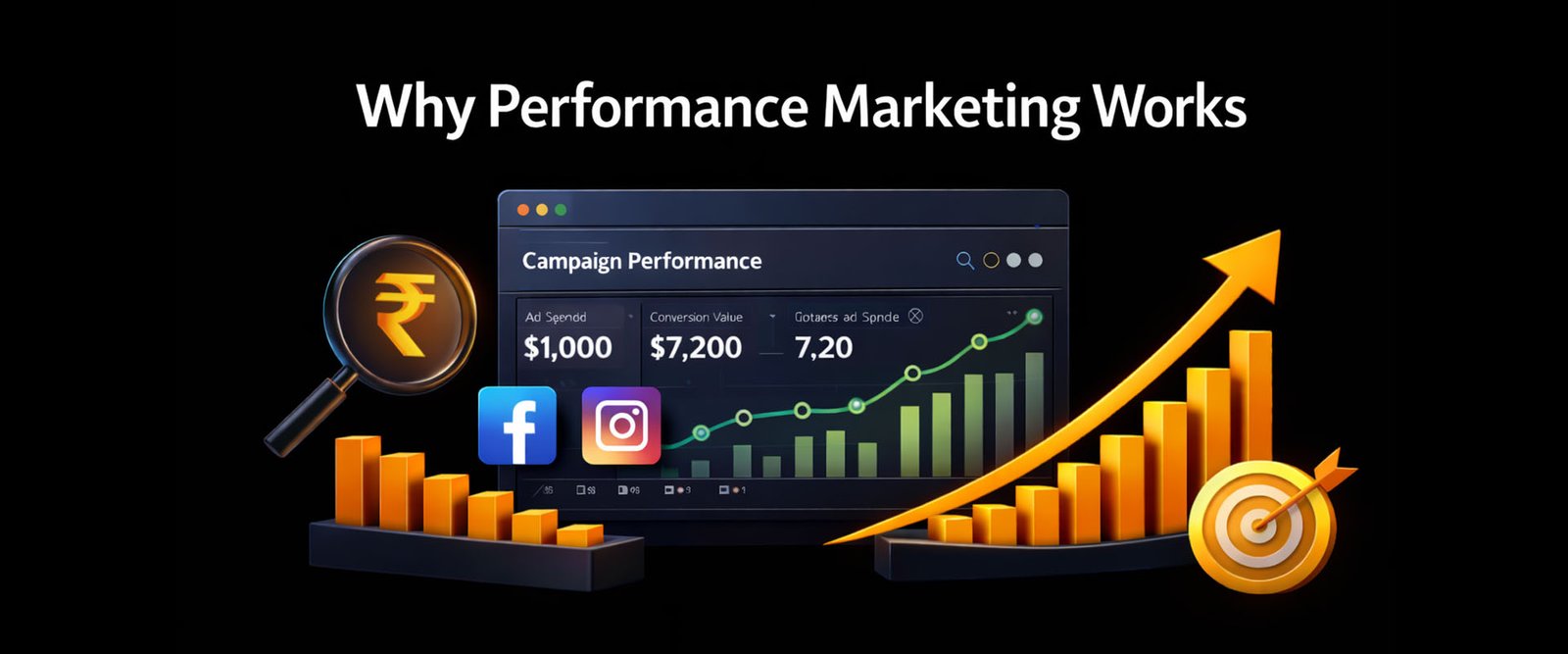
Introduction : What Is Exactly Performance Marketing?
Performance Marketing is a Digital Marketing Approach Where Every Rupee Spent is Tracked, Measured, and Optimized Based On Results.
In Simple Terms :
- You Don’t Pay For “Visibility”
- You Don’t Pay For “Likes” or “Reach”
- You Pay For Measurable Business Outcomes
These Outcomes Include :
- Online Sales
- Qualified Leads
- App installs
- Add-To-Cart Events
- Repeat Purchases
Unlike Traditional Advertising or Branding Heavy Digital Marketing, Performance Marketing is Accountability-Driven.
Why Performance Marketing Is Important For D2C Brands in India
1) Why Performance Based Marketing Is Perfect for D2C Brands
D2C Brands Operate in a High-Risk Environment :
- Thin Margins
- Rising Ad Costs
- Intense Competition
- Inventory Pressure
- Logistics & COD Risks
In Such a Scenario, Emotional Marketing Decisions Can Kill the Business.
Performance Marketing Helps D2C Founders:
- Track Profitability Daily
- Control Customer Acquisition Cost (CAC)
- Understand Which Channel is Actually Working
- Scale With Confidence Instead of Assumptions
For Indian D2C Brands, Performance Marketing is not Optional – It’s Foundational.
2) Why D2C Brands Are Confused About Results-Driven Marketing
India is Witnessing a Massive Rise in D2C Brands. Every Month, New Brands Launch on Shopify, Amazon, Flipkart, and Social Media. However, Behind the Scenes, Most Founders are Struggling with one Major Problem:
“We are spending money on ads, but we don’t know where the profit is.”
This confusion exists because many brands confuse Digital Marketing with D2C Performance Marketing.
Performance Marketing vs Traditional Digital Marketing
Traditional Digital Marketing
|
Focus on Reach & Impressions |
|
Vanity Metrics |
|
Fixed Budgets |
|
No Funnel Thinking |
|
Brand – First Approach |
Performance Marketing
|
Focus on Revenue |
|
Profit Metrics |
|
Scalable Budgets |
|
Full Funnel Strategy |
|
Data First Approach |
Core Channels Used in Performance Based Marketing
1.
Meta Ads (Facebook & Instagram)
Meta Ads are the backbone of Performance Based Marketing for most D2C brands.
Used correctly, they help in:
- Demand generation
- Retargeting website visitors
- Scaling winning products
- Building repeat purchases
But without a funnel, Meta Ads become a money pit.
2.
Google Ads (Search, Shopping & Performance Max)
Google Ads capture high-intent buyers.
Key formats include:
- Search Ads (people actively searching)
- Google Shopping Ads
- Performance Max campaigns
For D2C brands, Google Ads often deliver:
- Lower CAC
- Higher purchase intent
- Better quality traffic
3.
Marketplace Advertising (Amazon & Flipkart)
Amazon PPC, Flipkart Ads, and Quick Commerce ads are critical for:
- Ranking products
- Improving visibility
- Increasing conversion rate
- Scaling marketplace revenue
Brands ignoring marketplace Performance Based Marketing leave huge money on the table.
4.
Retention & Automation Channels
True Performance Based Marketing focuses on repeat revenue.
This includes:
- WhatsApp Marketing Automation
- Social Media Marketing
- SMS Remarketing
- Loyalty & Subscription Systems
Retention is Where Real Profitability is Built.
Key Metrics Every Performance-Based Marketing Brand Must Track
If your agency or internal team doesn’t talk about these metrics, that’s a red flag 🚩
- ROAS (Return on Ad Spend)
- CAC (Customer Acquisition Cost)
- AOV (Average Order Value)
- LTV (Lifetime Value)
- MER (Marketing Efficiency Ratio)
Common Mistakes D2C Brands Make With Performance Based Marketing
- Running Digital Advertising without understanding margins
- Scaling budgets without backend readiness
- Ignoring landing page & checkout optimization
- Choosing agencies that optimize clicks, not profits
- Not tracking contribution margin
These mistakes are the reason most D2C brands struggle to scale beyond a point.
Scaling a D2C Fashion Brand Sales-Driven Marketing From Breaking Even To 3x ROAS
An Indian Apparel Brand Was Struggling With High CAC and Stagnant Growth on Meta Ads. By Shifting From Broad Targeting to High-Intent Lookalike Audiences and Replacing Static Ads With UGC Video Content, We Revamped Their Entire Funnel. We also Optimized Their Shopify Checkout Process and Implemented Automated WhatsApp Retention Flows. Want Similar Results For Your Brand? Let Digital Tushar Joshi Build Your Growth System.
The Results: 200% Revenue Growth Markeitng in 90 Days
Our Data-Driven Strategy Transformed The Brand’s Profitability:
ROAS: Increased From 1.5x to 4.5x.
CAC: Reduced By 40%.
Revenue: Monthly Sales Grew By 200% While Maintaining a Healthy Contribution Margin.
Final Thoughts: Performance Based Marketing Is a System, Not a Service
Performance Marketing is Not:
- Just Meta Ads
- Just Google Ads
- Just Amazon PPC
It is a Growth System combining:
- Data
- Strategy
- Execution
- Optimization
- Retention
Brands That Understand This Win Long-Term.